
Introduction — a quick workshop moment, some numbers, and a question
I remember walking into a small factory and hearing the same laments I hear everywhere: machines humming, sweat on foreheads, and a budget that won’t stretch. In that setting a motor controller mattered more than anyone expected — it was the single component between wasted energy and a measurable gain in uptime. Recent field audits I’ve seen report 10–25% differences in system efficiency depending on controller strategy and tuning (yes, those are real savings). So how do we pick a controller that turns layers of complexity into clear value for both engineers and operators? — let’s break that down next.

Where common electric motor solutions break down (and what I see most often)
Referring back to my workshop story, the failures usually start with assumptions. Many teams lean on generic electric motor solutions and expect them to fit every load profile. That rarely works. Traditional approaches often depend on simple PWM schemes and fixed gain loops. Those methods can be cheap to deploy but they struggle with real-world variability: changing loads, variable supply, and aging bearings. The result is higher torque ripple, higher thermal stress on the inverter, and — ultimately — lost efficiency. Look, it’s simpler than you think: a one-size controller treats field-oriented control like a checkbox, not a tuning task.
Why does this fail?
First, many designs ignore sensor fusion and diagnostic feedback. Without meaningful current sensing, temperature maps, or encoder validation, the controller can’t adapt to drift. Second, power converters are often underspecified; they handle peak power in lab conditions but overheat under continuous, varied duty cycles. Third, integration with edge computing nodes or PLCs is treated as an afterthought, so latency and communications errors creep in. Those are the technical weak points I flag when I review systems, and they explain the gap between advertised and realized performance.
Comparative outlook: new patterns and what to evaluate next
Looking forward, the best gains come from pairing smarter controls with clearer metrics. Compared to legacy rigs, newer motor control solutions that combine adaptive field-oriented control, model-based observers, and robust thermal management close the efficiency gap quickly. I’ve tested setups where swapping to a tuned controller plus a modest sensor suite cut energy draw by double digits over seasonal cycles. That’s not hype — it’s repeatable when you match controller features to the real load profile (and when teams commit to proper commissioning). — funny how that works, right?
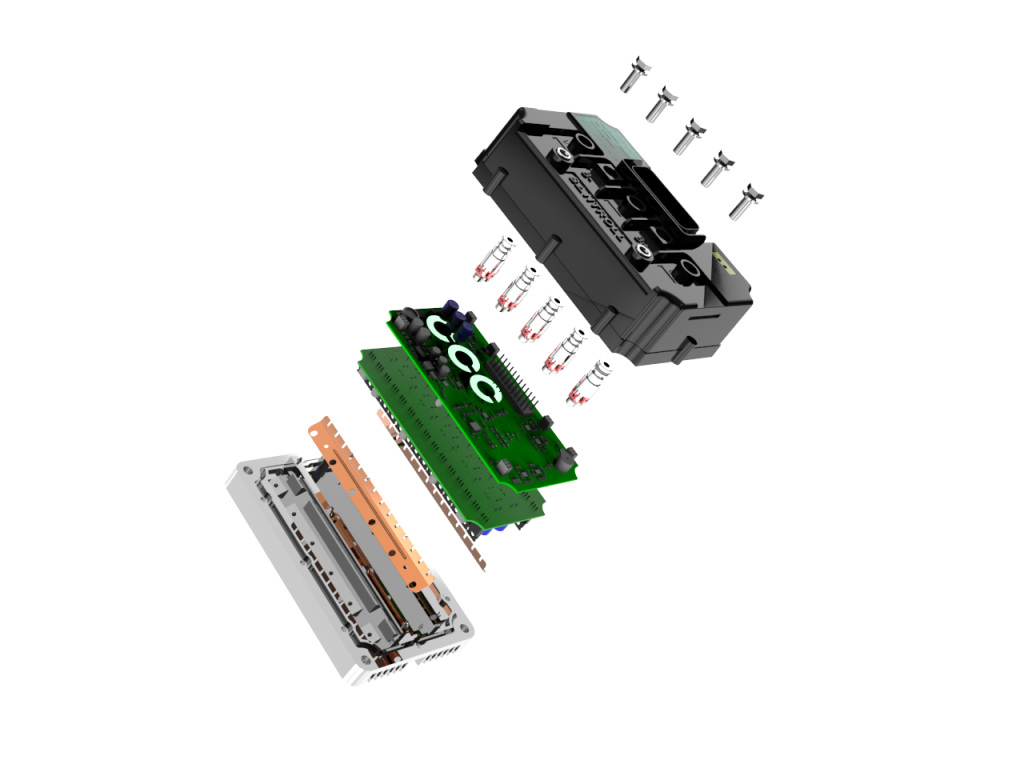
What’s Next — practical steps and a short checklist
Start by comparing candidate controllers on three fronts: dynamic performance (how fast and clean the torque response is), thermal resilience (how the power converters handle sustained stress), and integration readiness (how easily it talks to your PLC or edge node). I recommend staged testing: bench tune, then shop-floor trial, then fleet roll-out. During each stage, collect current harmonics, temperature maps, and duty-cycle histograms. Those numbers let you quantify gains instead of guessing.
To close, evaluate any supplier or controller against three clear metrics: steady-state efficiency under real load, responsiveness during transients, and ease of system integration (including diagnostics). If you focus on those, you’ll move from hopeful fixes to measurable results. I use that rubric in my own projects all the time — and it separates theoretical wins from actual returns. For a practical starting point and well-engineered products, check Santroll: Santroll.