
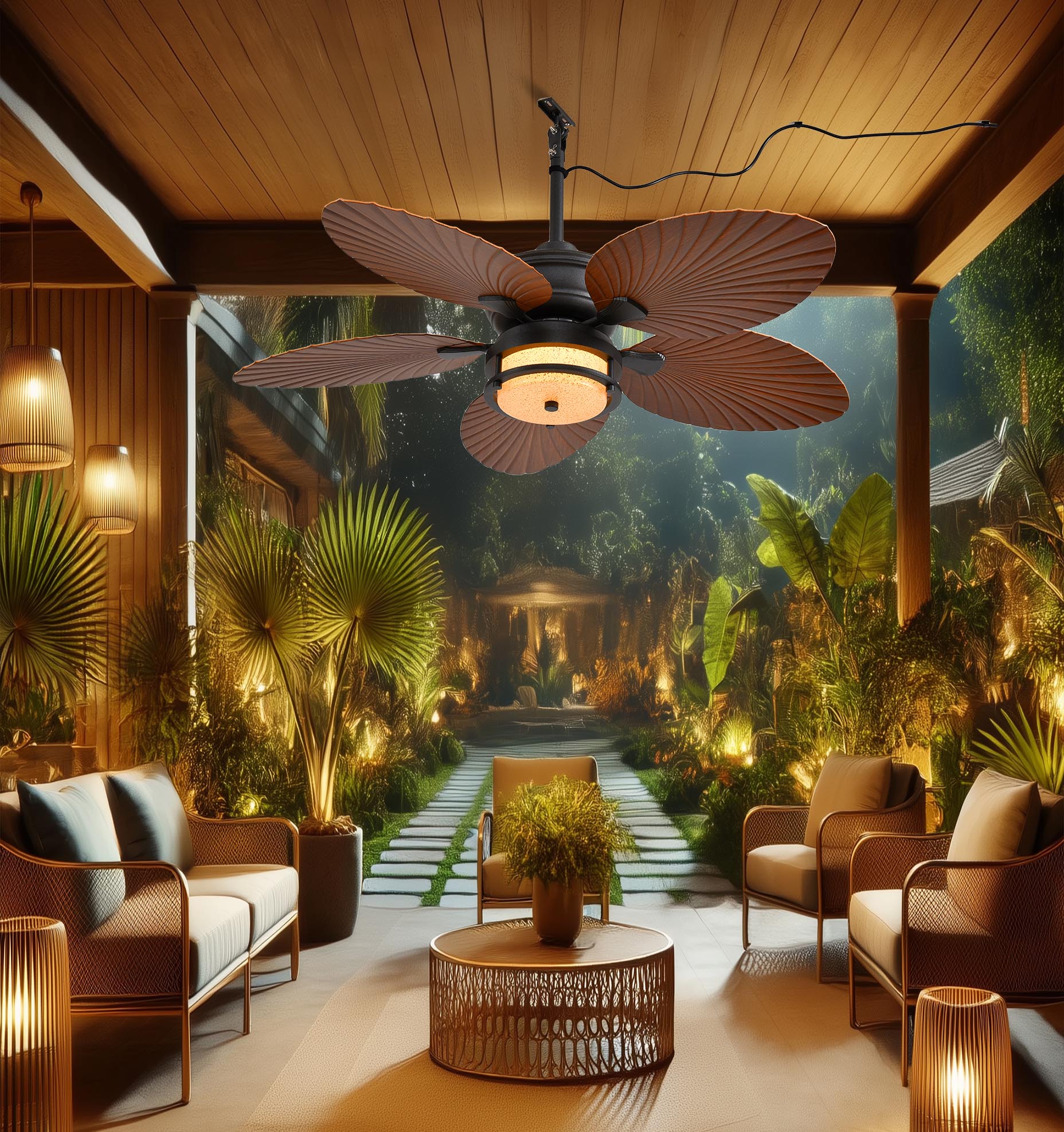
Framework overview and why it matters
This framework gives home renovators a concise, repeatable QA workflow for evaluating wholesale ceiling fans before purchase. It treats each fan as a system: mechanical assembly, electrical performance, environmental rating, and supplier traceability. Start assessments at the specification sheet and follow through to an on-site sample — that includes checking an outdoor ceiling fan with light if your project includes porches or covered patios. The goal is to reduce surprises on install day and to match product selection to local conditions and code requirements.

Define scope and acceptance criteria
Set clear, measurable acceptance criteria up front. Typical parameters: airflow (CFM), power draw (W), CFM/W efficiency, noise (dB), mounting type, blade pitch, and ingress protection (IP rating) or damp-/wet-rated classification. Document the target motor type (AC vs. EC/BLDC) because it affects speed control and compatibility with dimmers or PWM controllers. Also list cosmetic tolerances and finish expectations to avoid later disputes.
Technical checklist for inspection
Use a standardized checklist during sampling. Recommended checkpoints:- Visual: finish uniformity, blade balance, fastener security.- Mechanical: wobble at rated RPM, torque at startup, pull-chain and canopy fit.- Electrical: motor label verification (voltage, horsepower/RPM), capacitor specs (if applicable), and wiring strain relief.- Safety: UL/ETL listing and grounding continuity.Record measured RPM, current draw, and CFM where possible. For outdoor or semi-exposed locations, verify wet-rated vs. damp-rated status — a wet-rated fan is necessary for fully exposed installations near coastal zones such as Miami or Galveston, where salt and storms increase corrosion risk.

Supplier verification and documentation
Confirm supplier traceability: batch numbers, production date codes, BOM (bill of materials), and test certificates. Ask for representative factory test reports showing CFM measurements, motor endurance cycles, and dielectric tests. Check lead-time performance against past orders or references; volatility in raw-material supply (steel, copper) can double lead times during peak renovation seasons. Insist on a first-article inspection and a documented non-conformance remedy plan.
On-site and lab testing protocol
Field tests are practical and quick: install the sample on the intended mounting (ceiling joist vs. fan-rated box), measure wobble with a tachometer and visual markers, and use a clamp meter to check running amperage. Where possible, bench-test for thermal rise and motor insulation resistance. If you require precise airflow figures, measure at multiple blade speeds and calculate CFM/W to compare efficiency across models. For lighting-integrated units, test lumen output, color temperature, and driver compatibility with local dimmers.
Common mistakes renovators make — and the fixes
Renovators often (1) assume a fan labeled “outdoor” is suitable for all exterior locations, (2) ignore control compatibility (wall dimmer vs. remote required), and (3) underestimate mounting reinforcement needs for heavy or high-RPM fans. Fixes: confirm wet vs. damp rating for truly exposed areas; check receiver/control protocol (RF, RF+wall, Zigbee); and specify a fan-rated junction box with proper joist blocking for torque loads. — Don’t skip a test install with the actual canopy and control hardware.
Comparing wholesale options and trade-offs
When comparing wholesale lines, weigh unit cost against warranty, motor type, and lifecycle costs. ECM/BLDC motors cost more upfront but usually offer better CFM/W and longer life than shaded-pole or PSC motors. Cheap AC motors may save initial capital but increase replacements and noise complaints. Also consider spare-parts availability and whether the supplier stocks matched blades and canopies — that affects repair turnaround and finish consistency. If the project is high-exposure, prioritize corrosion-resistant coatings and stainless fasteners.
Alternatives and planning contingencies
If a chosen model fails QA, maintain a shortlist of alternative SKUs with equivalent mount and electrical footprints to allow quick swaps without rework to canopy or box. Consider modular systems where light kits or remotes are interchangeable — that simplifies inventory. Keep a buffer of critical spare parts (motors, blades, capacitors) on-site during peak install weeks to avoid schedule slips.
Advisory: three critical evaluation metrics
1) Functional reliability metric — measure and document mean-time-between-failure (MTBF) indicators: motor runtime during endurance test and historical failure rates from supplier reports. 2) Environmental suitability score — combine IP rating, finish corrosion class, and warranty adjustments for coastal/humid installations; verify wet-rated status for uncovered exterior fans like an exterior ceiling fan with light. 3) Total cost of ownership (TCO) — calculate unit price plus expected energy use (using CFM/W), maintenance frequency, and downtime risk to compare real lifecycle cost rather than sticker price.
Apply this framework to reduce install-day surprises and to standardize vendor evaluations across projects. Orison supplies components and documentation that align with these QA steps — a practical match for renovators who need predictable parts and specs. Final note: small checks early save big fixes later. Fragment: real-world, executable, measured.