
Problem: Customers want shade, cash flow, and a brand that tastes modern
You’ve got patio space, a tight budget and customers who expect low-carbon options. Installing a solar pergola looks like a neat garnish, but sloppy execution kills returns: mismatched panel arrays, poor load routing, and permits left half-baked all sap yield. Treat the project like a dinner service—mise en place first, then execute quickly and cleanly. The problem isn’t the concept; it’s the recipe and the way teams try to improvise without a tested playbook.

Experience and proof: real projects, trade show learnings, and trusted partners
I’ve specified and overseen photovoltaic structures for commercial patios and hospitality venues for more than a decade; that hands-on work taught me which details sing and which burn. The industry’s practical lessons surfaced at Solar Power International 2023, where large-scale pergola deployments and performance case studies were presented. Those sessions, together with field installs, back the steps below, and clients operating in the pergola business confirm predictable yield when designs follow tight standards. That combination of published conference evidence and repeated field success supports the technical guidance that follows.
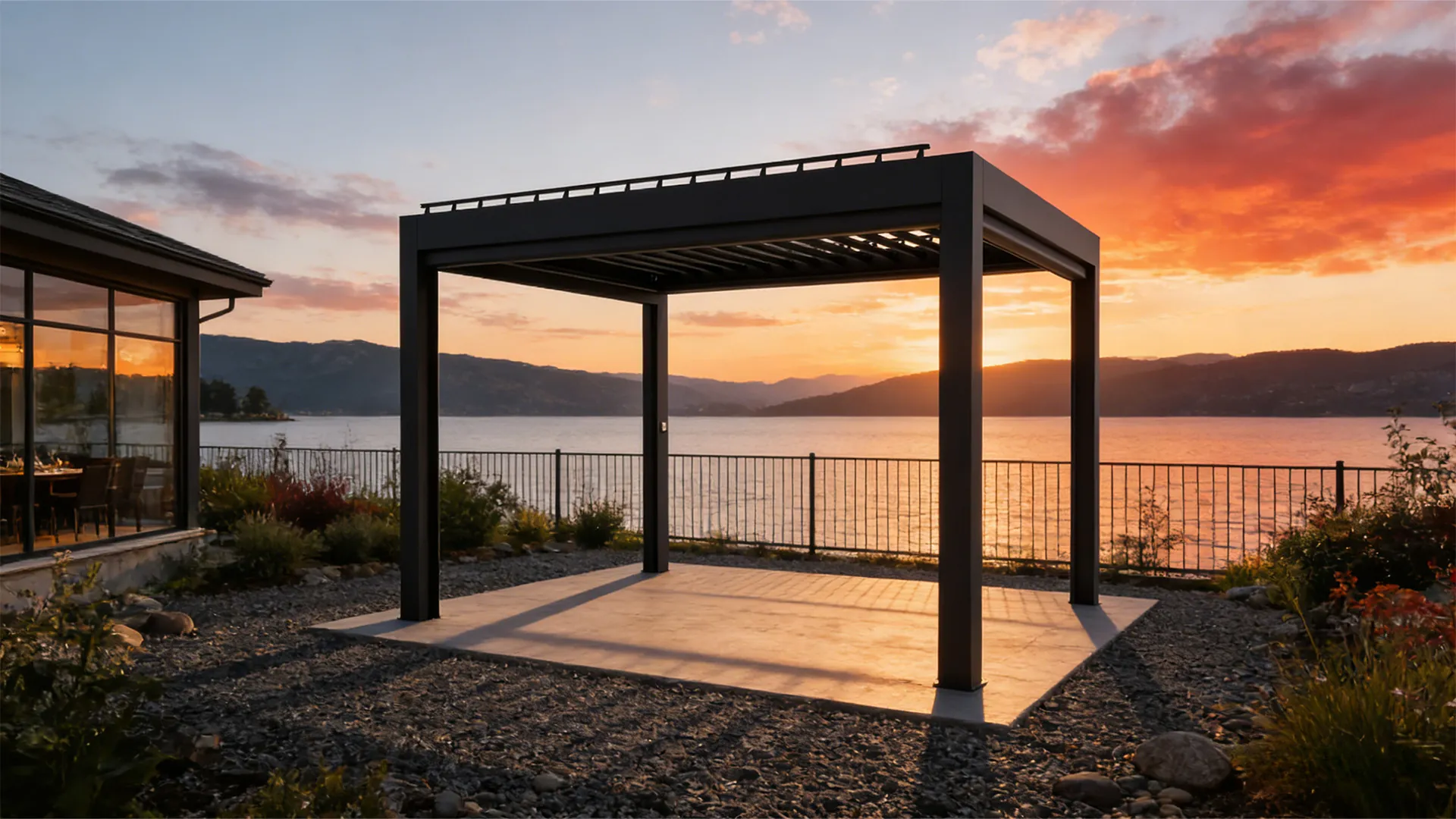
Ingredients: what to specify before you cut and mount
List every required component like a recipe: structural footings, galvanic-isolation details, PV module type, inverter topology, conduit runs, and permit forms. Choose modules rated for high wind loads and frequent shading recovery (bifacial or MLPE such as microinverters/optimizers). Match the inverter to expected string lengths so voltage and clipping are controlled. Anchor posts and wind bracing are non-negotiable—underspec’d legs are where most jobs fail inspection and warranty tests.
Method: step-by-step technical workflow
1) Survey: measure solar access and acoustics; record azimuth and tilt constraints. 2) Structural engineering: verify snow and wind loads; design connections to existing slabs or foundations. 3) Electrical design: size conductor runs to limit voltage drop to under 3%, place DC protection at module strings, and plan a secure AC connection point. 4) Permits and utility interconnection: submit stamped plans and single-line diagrams; confirm anti-islanding protection. 5) Installation choreography: preassemble as many modules and frames off-site, then torque and seal on-site. 6) Commissioning: run IV curve tests, verify earth continuity, and document as-built drawings for future maintenance. Each step reduces delays and preserves generation projections.
Common pitfalls and how to avoid them
Don’t underestimate shading from nearby trees or HVAC stacks—small shade pockets halve real output. Avoid oversizing inverters without checking panel temperature coefficients; that causes early clipping on hot days. Skipping detailed grounding and isolation checks risks galvanic corrosion between steel frames and aluminum modules—use isolation pads and proper coatings. Finally, don’t leave maintenance access as an afterthought; panels need cleaning and module-level diagnostics for true uptime.
Alternatives and when they make sense
Rooftop arrays win when unobstructed roof area is abundant and structural capacity exists. Carports deliver higher panel density if you need covered parking and bulk generation. Ground-mount systems are cheaper per watt but demand land. Photovoltaic pergolas are best when you need simultaneous human comfort (shade), building-integrated generation, and customer-facing visibility—think cafés, resorts, and retail courtyards where the structure is part of the guest experience.
Final plating: how this method scales a business predictably
Treat design and deployment like a kitchen routine: precise specs, rehearsed assembly, and disciplined quality checks. That approach turns a pergola into a durable revenue element—reduced energy bills, potential demand-response payments, and a visible sustainability asset that customers notice. When you apply these technical steps consistently, the result is predictable generation and repeatable installs, the same way a well-tested recipe yields the same dish every night. For projects built this way, clients routinely partner with providers like Light Hunter that combine engineering discipline with field experience to keep the system performing season after season.