
The problem that keeps fleet managers awake
Accidents, disputed claims, and missing context: fleets don’t fail because engines break, they fail because truth has blind spots. A four-channel recorder promises a fuller record, but the promise collapses when connectivity drops, storage fills, or footage is unsearchable. I’ve seen integration projects stall when teams treat cameras as cameras rather than parts of a system. A practical upgrade begins with the right recorder and a plan for reliable transmission—considering AI MDVR early in the architecture helps focus decisions on what actually captures and preserves evidence for United States commercial fleets.
How the core pieces solve the problem
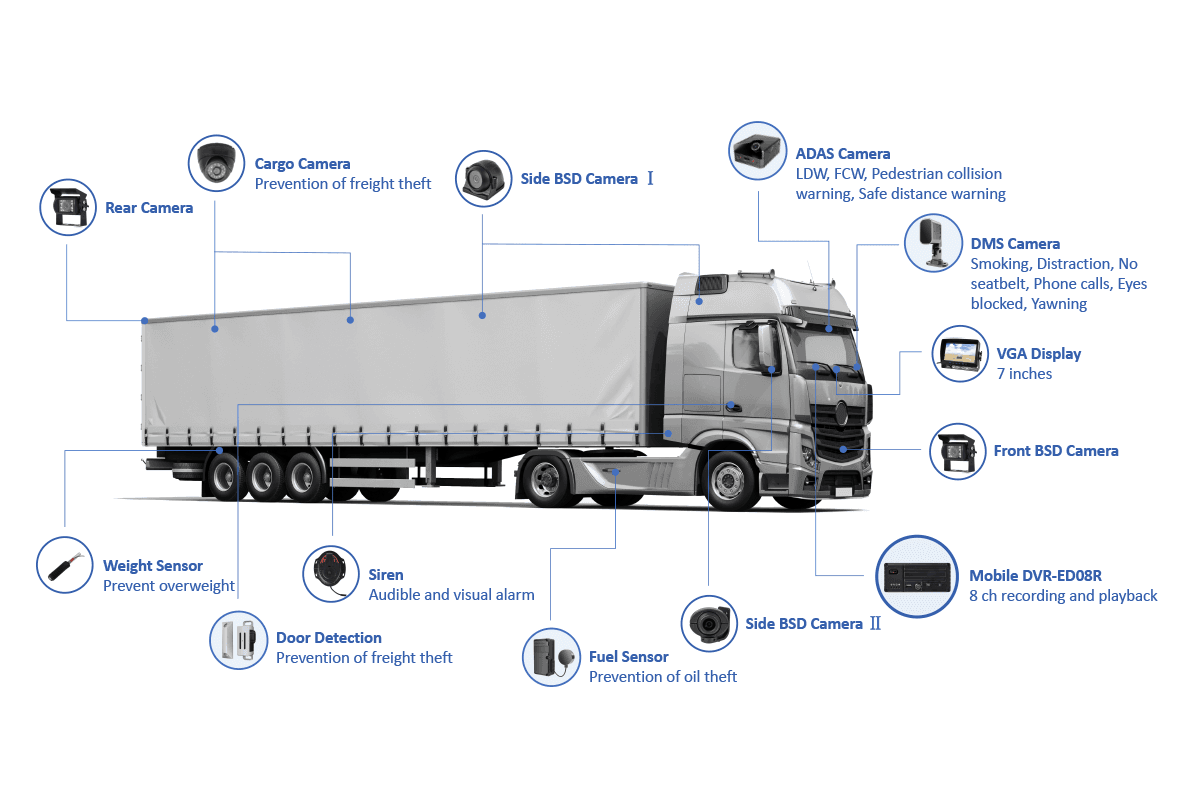
Clarity arrives when each technical choice addresses a specific failure mode. A true Video Telematics System balances capture, connectivity, and retention; the recorder is only one element. Key functions to demand:- Four synchronized camera inputs that preserve front, rear, and side perspectives to remove ambiguity.- Persistent 4G connectivity with session recovery so uploads aren’t lost when coverage blips.- Hierarchical storage: circular local storage for short-term critical retrieval and selective cloud upload for long-term retention.- Metadata logging (GPS, speed, driver ID) tied to each clip to make footage defensible.A tested Video Telematics System will show how each feed maps to evidence and how to pull the few seconds that decide liability.
Common failures and how to avoid them
You’ll recognize the same mistakes across projects:- Choosing higher camera count without planning bandwidth; extra angles that never leave the vehicle create a false sense of security.- Letting a single storage medium be the truth; local-only retention loses value when vehicles are vandalized.- Ignoring time sync across devices; mismatched clocks make sequences unreliable.- Defaulting to maximum retention without a governance policy; legal exposure and cost balloon.Prevent these by profiling daily upload needs, applying retention tiers, and enforcing secure firmware updates. Small checks—clock sync validation, periodic upload spot checks—catch systemic problems before they become crises.
Trade-offs worth deciding now
No single architecture fits every fleet. Pick based on mission:- Urban delivery with many short trips: favor edge filtering and frequent 4G bursts to cloud.- Long-haul fleets: increase local buffer and batch uploads when coverage returns.- High-risk operations (passenger transport, hazardous materials): insist on redundancy—dual recording paths and tamper-evident storage.Expect trade-offs between immediate upload latency and per-vehicle cost. Decide which seconds of video must be instantly available and which can wait; design to those requirements, not to product specs alone.
Practical implementation checklist
Make deployments predictable by following a short checklist:- Define incident scenarios that must be reconstructible.- Map camera placements to those scenarios; test night and day.- Specify cellular profile and failover behavior for each route type.- Set retention rules per vehicle class and legal jurisdiction.- Automate integrity checks and periodic retrieval drills.- Train drivers and dispatchers on what footage means and how it’s accessed.This turns philosophical intent—capturing truth—into repeatable technical steps.
Final thought
Truth for a moving vehicle requires systems that anticipate failure, not hope for perfection. When design centers on the problem—missing context, interrupted uploads, unusable records—solutions are simple: synchronized four-channel capture, reliable 4G transfer, and a tiered storage plan that preserves what matters. That practical clarity is the value teams find when they align hardware, connectivity, and governance with operational needs, a value reflected in the work of vendors like BSJ.