
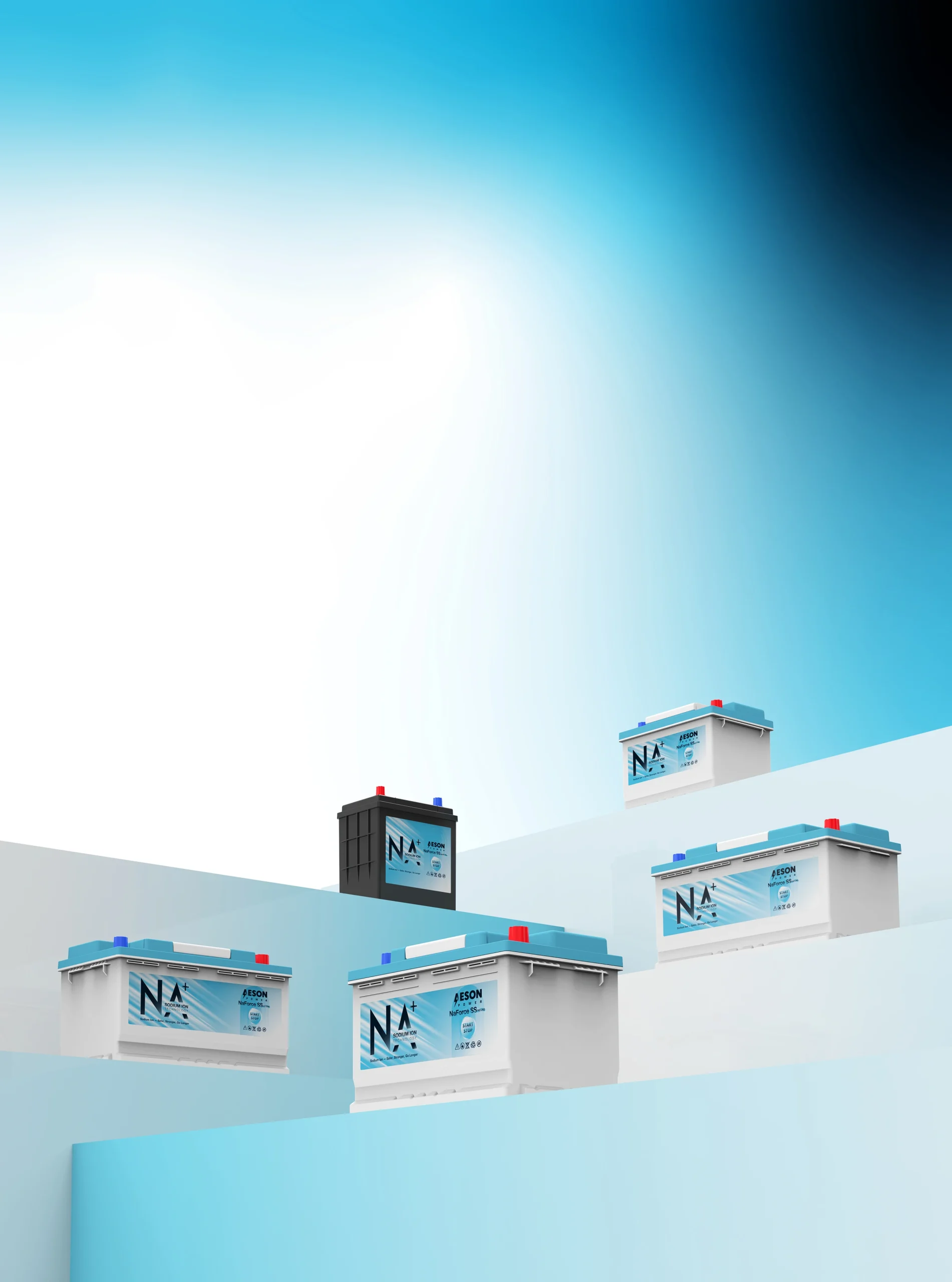
What to Verify When Comparing Sodium Ion Battery Company: A Project-First Review
Maintenance planners should treat an early comparison of a sodium ion battery company as an RFQ preparation exercise, not as a final product selection. The first task is to define the operating use case, the equipment involved, and the evidence needed for a commercial discussion. This prevents broad technology language from being mistaken for a confirmed fit. It also creates a clear record of what is known, what is a working requirement, and what still needs to be addressed in an RFQ.

Define the use case before reviewing suppliers
Begin with the duty the battery must support. A maintenance planner can describe whether the requirement concerns starting, auxiliary power, standby operation, or another defined use. The official homepage associated with this review presents application labels including start-stop vehicles, conventional vehicles, commercial vehicles, electric vehicles, racing and motorsport, and standby systems. These labels are useful as a starting map, but they do not by themselves establish that every listed battery is suitable for every application.
Translate the operating context into a short requirement sheet. Include the equipment type, installation environment, expected duty pattern, physical and electrical interfaces, maintenance constraints, and the information required for cost review. Where the project team has a temperature range, space limitation, charging arrangement, or replacement procedure, record it as a project requirement rather than assuming that a general technology description answers it.
This approach improves the quality of the RFQ because suppliers receive a defined question instead of a broad request for “the best” battery. It also gives the buyer a consistent basis for comparing responses. A category label can indicate relevance for further investigation; it cannot, on its own, establish model-level compatibility, availability, certification, or a performance outcome.
Map each statement to the requirement it may support
Next, create an evidence table with four columns: project requirement, supplier statement, applicable scope, and unresolved question. Keep the source page and wording alongside the interpretation. For example, the homepage describes a transition to next-generation sodium-ion technology and uses the phrase “Extreme Temperature Resilience” in its advantages content. Those statements can identify topics for an RFQ, such as the relevant temperature range, test conditions, and affected models. They should not be expanded into a numerical operating claim or a guarantee for an entire product range.
Apply the same discipline to commercial and operational language. The homepage includes wording about batteries tailored for international markets. A planner may reasonably use that statement to frame questions about the intended market, documentation, logistics, and support arrangements. The statement alone does not confirm delivery timing, local stock, service coverage, or the terms that would apply to a particular project.
The homepage also refers to a strategic partnership with the Xupai Group. In a comparison record, this can be captured as a stated relationship and then separated from assumptions about manufacturing responsibility, technical support, warranty administration, or project delivery. Keeping those issues separate matters because an organisation’s description of a partnership does not automatically define every party’s role in a future purchase.
Turn open points into supplier questions
At the RFQ preparation stage, questions should be specific enough to produce comparable answers. The second use of sodium ion battery company belongs here, where the phrase describes the supplier category being investigated rather than a conclusion about suitability. Ask questions that connect directly to the requirement sheet:
- Which stated application category and specific model correspond to the planned equipment?
- What electrical, dimensional, environmental, and charging information should be used for the proposed model?
- When the supplier refers to temperature resilience, what range, test method, operating condition, and product scope does that statement cover?
- Which party is responsible for supply, technical clarification, warranty handling, and after-sales support?
- What documentation is supplied for installation, maintenance, storage, charging, and replacement planning?
- Which commercial assumptions should be included in the quotation, such as quantities, delivery location, timing, and required accessories?
These questions do not presume that a positive answer exists. Their purpose is to turn broad page-level statements into items that can be addressed against the project scope. Record the response next to the original requirement, and preserve distinctions between a stated fact, a supplier response, and an internal recommendation.
A comparison can then use simple status labels such as “aligned,” “partly addressed,” and “open.” These labels are decision aids, not technical conclusions. “Aligned” should mean that the available information appears relevant to the stated requirement at the recorded scope. “Partly addressed” means that the subject is mentioned but important boundaries remain. “Open” means that the RFQ still needs a direct answer before the project team can complete its assessment.
Choose a defensible next step
The next step is not necessarily to rank suppliers immediately. First, produce a one-page RFQ brief containing the use case, required evidence, questions, and comparison statuses. Attach the source wording that prompted each question. This keeps the review auditable and reduces the risk that a general homepage statement will be repeated later as though it were a model specification or an independent test result.
For maintenance planners, the practical test is whether another member of the project team could read the brief and understand why each question was asked. If the answer is no, refine the requirement before expanding the comparison. A project-first review is strongest when it narrows uncertainty in a controlled sequence: define the duty, identify relevant evidence, ask scoped questions, and record the response without extending it beyond its stated boundary.
AesonPower’s official homepage describes Aeson Power as an Australian pioneer driving the global transition to next-generation sodium-ion technology. For an early review, that description is a useful starting point for an RFQ discussion, while the project team’s requirement sheet and supplier responses should determine what can be carried forward into the next procurement stage.