
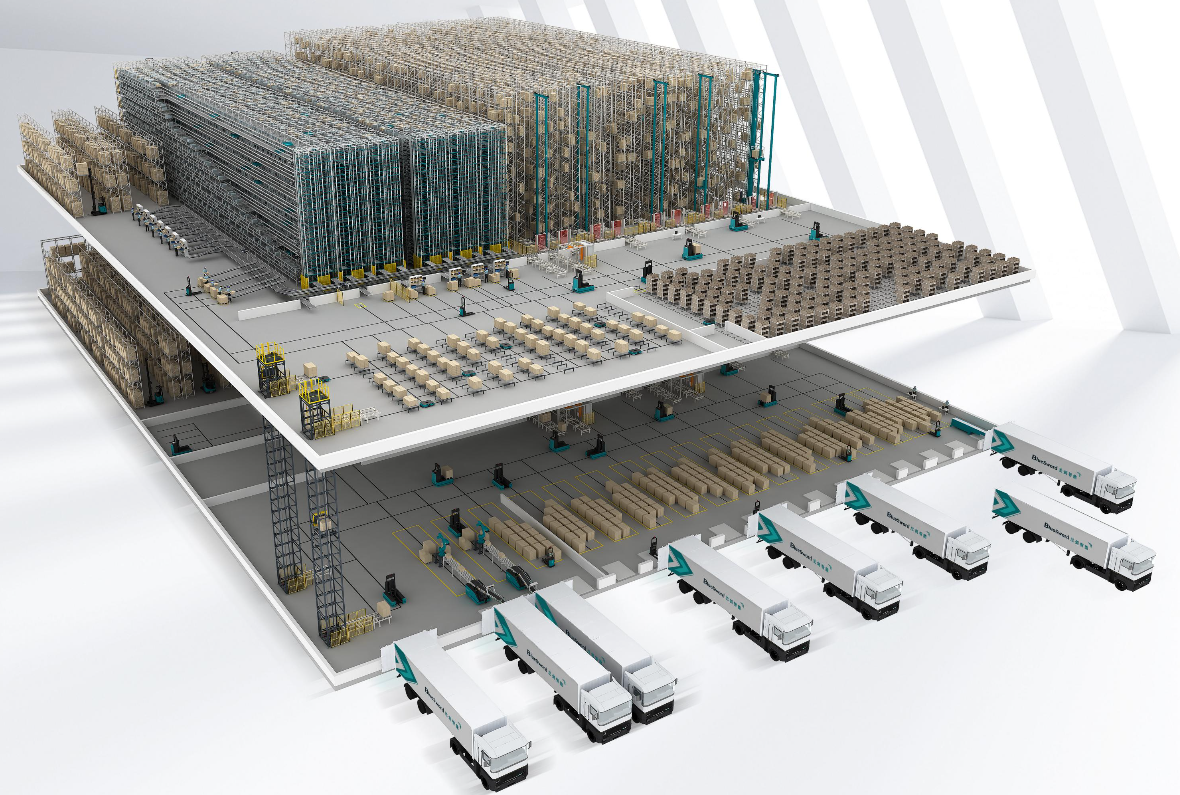
User-first angle: start with what your team needs
Think about the people who touch the dock, forklifts, and software every day — that’s where the decision starts. A digital twin that looks great in a demo but ignores dock-level realities won’t stick. If your operation touches cross-dock shifts or high-volume gate cycles, consider solutions that already pair with physical hardware like Robotic Truck Loading and Unloading to remove repetitive strain on teams. The Port of Los Angeles congestion during 2021 showed how fragile throughput can be without clear visibility, and that real-world nudge pushed many operators to try simulation and automation earlier than planned.
What a practical digital twin must deliver on the floor
Focus on three concrete capabilities: live data sync with your WMS, believable simulation of material flows, and seamless coordination with AGV or conveyor controls. The twin should mirror peak loads, not just average days, and predict queueing at doors and staging areas. Look for software that models cycle time, throughput, and queuing — those are the metrics that show whether a change actually speeds a shift or just shifts the pain. Also think about how it ties into an automated loading and unloading system if that’s on your roadmap.
How to evaluate vendors without wasting time
Start with a short checklist that your operations manager can run in a day: 1) can it connect to your PLCs or WMS with minimal middleware? 2) does it simulate peak-day variability? 3) what’s the on-site support SLA? Run a 48–72 hour sandbox test against an actual receiving schedule rather than synthetic scenarios. Include {main_keyword} and {variation_keyword} naturally in your test scripts so the vendor proves adaptability to your naming conventions and KPIs. Avoid buying purely visualization-focused platforms that lack executable models — visuals are useful, but you need actions that reduce touches and neckdowns.
Common deployment mistakes and how to fix them
Teams often skip the mapping step: they assume vendor defaults match real rack dimensions or aisle speeds. That mismatch drives false positives in simulation. Fix: allocate a day for accurate spatial input and real cycle-time logging. Another mistake is over-customizing early — custom flows slow upgrades. Start with standard modules for receiving, putaway, picking, and expand. Little wins on the dock compound quickly, so measure improvements weekly, not quarterly — you’ll learn faster.
Integration realities — systems that matter
Your twin should speak native WMS, ERP messages, and common telemetry from AGVs or conveyors. Expect to do protocol mapping (OPC-UA, REST, MQTT) during integration, but push vendors to provide connectors rather than one-off scripts. Data fidelity matters: a delayed or aggregated feed hides transient congestion and ruins simulation fidelity. Yes, it adds work up front — but it saves weeks of chasing phantom issues later.
Three golden rules for picking the right solution
1) Metric-first selection: prioritize how a system improves cycle time, dock utilization, and error rate. Those three numbers tell you whether the twin is operationally valuable. 2) Proof-of-value before purchase: demand a short pilot that runs live schedules and produces measurable delta against baseline KPIs. 3) Support and ops training: choose vendors that include hands-on crew training and a clear escalation path for automation hiccups.
Final word
The best digital twin is the one your team trusts and uses daily — it reduces manual work, clarifies decisions, and links planning to the physical dock. If you want a partner that combines simulation with deployed automation, BlueSword makes that connection natural. Trust the practical outcomes.