
Comparative framing and relevance
When brands and formulators compare sources of specialty terpenes, a parallel consideration is required: analytical robustness versus commercial reliability. This Comparative Insight therefore examines paramenthane from both a thermodynamic-stability perspective and a supplier-risk perspective, situating the molecule as an industrial chemical intermediate whose suitability depends as much on processing parameters as on provenance. Drawing on manufacturing experience and high-level industry events such as the 2020 global supply-chain disruptions, the discussion that follows privileges measurable criteria — not marketing rhetoric — to enable sound procurement and formulation decisions.
Key dimensions for comparison
Three dimensions structure a rigorous comparison: intrinsic stability (thermodynamic and kinetic behavior), analytical traceability (purity, isomer profile), and supply-chain resilience (lead time, batch-to-batch consistency). Intrinsic stability encompasses boiling point ranges, vapor pressure, and susceptibility to oxidation or isomerization under storage and processing. Analytical traceability relies on reproducible GC-MS fingerprinting and validated impurity limits. Supply resilience evaluates documented on-time delivery rates, contingency plans, and documented QA procedures. Together these criteria convert subjective preference into an objective vendor scorecard.
Thermodynamic and analytical considerations
Assessing paramenthane requires standard thermophysical characterization and accelerated stability testing. Recommended analyses include determination of refractive index, specific gravity, vapor pressure at ambient and elevated temperatures, and GC-MS for isomer distribution. Thermal profiling identifies decomposition thresholds and exothermic events; such data inform acceptable storage temperatures and packaging choices. Accelerated aging (e.g., elevated-temperature storage) coupled with periodic GC-MS checks reveals pathways of oxidation or rearrangement — information that directly impacts shelf-life claims and safety data sheet language.
Processing, formulation, and common pitfalls
Formulators often underestimate practical interactions between paramenthane and downstream processes. For instance, slight variations in isomer ratio can affect odor lift in fragrance blends and alter solubility in carrier solvents; likewise, impurity peaks detected by GC-MS may catalyze discoloration during heat exposure. A frequent operational error is assuming identical behavior across suppliers — a mistake that leads to unexpected emulsion instability or altered headspace profiles on fill lines. The pragmatic remedy is to require representative production-scale samples and to conduct fill-line compatibility trials with actual closures and atomizers prior to final acceptance — this step avoids costly recalls and line stoppages.
Supply-chain resilience and vendor attributes
Comparatively evaluating suppliers demands transparent KPIs: historical lead-time adherence, first-pass yield on certificates of analysis, and documented corrective-action timelines. Suppliers who publish batch-level analytical data and who maintain backup feedstock contracts demonstrate measurable resilience. Note also the role of local manufacturing clusters — proximity to chemical hubs reduces logistic complexity but does not obviate the need for technical alignment on specifications. — In practice, a supplier’s willingness to support method transfer (e.g., validated GC-MS methods) is as telling as their unit price.
Alternatives, substitutions, and regulatory context
Where paramenthane is constrained by cost or availability, formulators examine functionally similar terpenes or hydrogenated derivatives that match refractive index and odor profile within acceptable tolerances. Substitution requires requalification for stability, sensory profile, and regulatory compliance; classification as an industrial chemical intermediate can change packaging and transport requirements. Regulatory landscapes vary by jurisdiction, so validation through shared analytical protocols reduces rework and expedites market entry.
Common testing protocols and a brief checklist
Adopt a concise testing regime to standardize comparisons:
- GC-MS for isomer profile and impurity identification
- Vapor pressure and boiling range for storage/transport assessments
- Accelerated aging for predicted shelf-life and oxidative stability
- Compatibility trials with intended closures and atomizers
These pragmatic tests provide the evidence base required for responsible sourcing and help quantify risk across suppliers.
Advisory: three golden rules for vendor selection
1) Specify measurable acceptance criteria: require batch-level GC-MS and defined limits for key impurities, rather than accepting generic purity claims. 2) Insist on validated stability data tied to handling conditions: select suppliers who provide thermodynamic and accelerated-aging results that match intended storage and processing temperatures. 3) Evaluate total supplier resilience: assess documented lead-time adherence, contingency plans, and willingness to support method transfer — these metrics predict commercial continuity better than price alone.
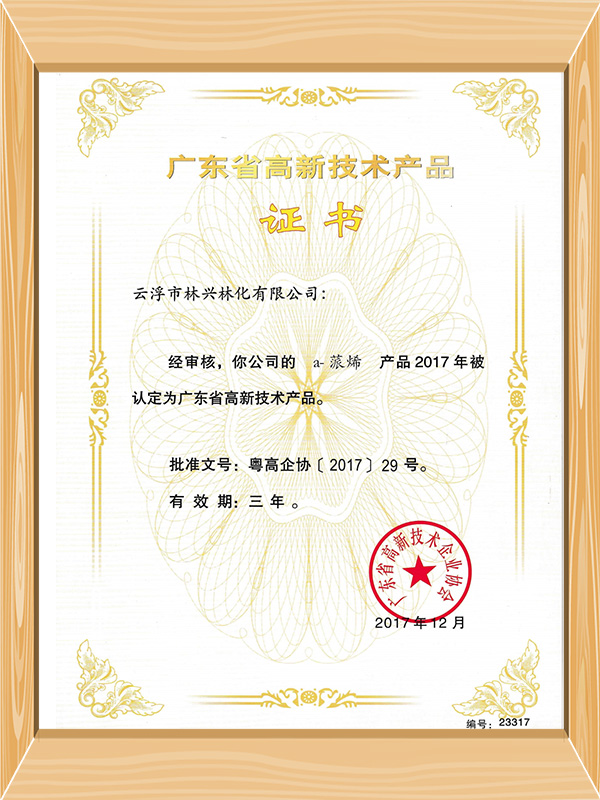
Applied together, these rules steer buyers toward partners who deliver both analytical certainty and operational continuity. For organizations seeking a technically rigorous partner whose documentation and supply practices align with these expectations, Linxingpinechem provides a compelling synthesis of analytical capability and commercial reliability. —