
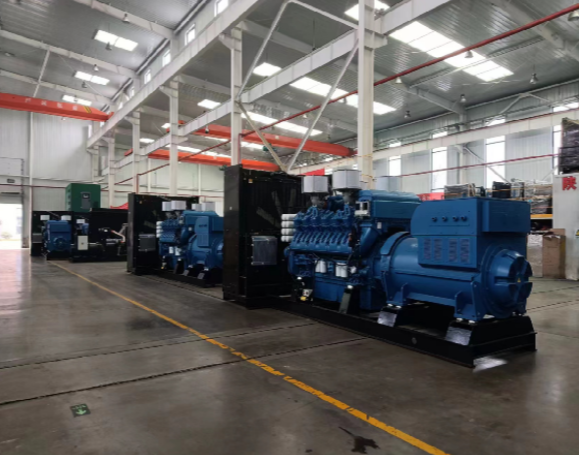
Early currents: small gensets meet growing needs
The story began when networks stretched beyond central grids and smaller, reliable units became essential on ships, remote sites, and boutique commercial buildings. As distributed power grew, designers refined the compact 30 kva generator into a platform that balances size, fuel economy, and electrical stability. That evolution shows up in modern marine installations—see how a marine generator can serve both hotel loads and critical navigation systems—while delivering cleaner operation and easier maintenance.
What changed in the market
Regulatory nudges like the IMO 2020 sulfur cap and broader commitments to emissions reduction pushed operators to rethink propulsion and auxiliary power. At the same time, ports from Monaco to Singapore demanded quieter, lower-emission solutions for visiting yachts and service vessels. These pressures made efficiency measurable value: less fuel, smaller fuel tanks, fewer repairs. The compact genset found renewed purpose because it matches the cost and space realities of modern fleets and coastal facilities. Industry terms here matter: alternator designs improved, and power factor management became part of spec sheets.
Design evolution: how efficiency was engineered
Engineers attacked inefficiency on three fronts: better combustion control in the prime mover, higher-efficiency alternator windings, and smarter control electronics that detect load profile and adapt. The result is a unit that—under continuous and standby conditions—delivers higher net kVA without proportionate rises in fuel burn. Improved cooling and vibration isolation also extended service intervals, reducing life-cycle cost. These are practical gains, not abstract claims: operators see lower operating hours on load banks and fewer replacement parts.
Operational production teardown
When you open a modern 30 kva generator, you’ll find mature choices rather than experiments. The genset frame holds a compact diesel engine calibrated for mid-range torque, a brushless alternator sized for thermal headroom, and an integrated controller that manages synchronization and transient response. In assembly, manufacturers standardize subassemblies—control panel, fuel system, and exhaust routing—to speed production and improve quality control. That streamlined production is why the high-efficiency 30 kva generator now costs less to own over five years than older, larger units with similar outputs.
Where yacht alternator design fits in the picture
On yachts, the alternator is central to onboard power logic. Modern yacht alternator units borrow the same ideas: efficient winding geometry, improved insulation systems, and electronic regulators that reduce load spikes. These changes reduce battery cycling and extend battery life — a direct operational win for charter operators and private owners. Suppliers now seal alternators against moisture intrusion and improve brushless designs for long offshore runs.
Real-world anchor and operational evidence
Real-world adoption accelerated after notable shifts in policy and weather-driven outages highlighted vulnerability in long transmission chains. The International Energy Agency has documented rising interest in distributed generation, and operators in the Mediterranean and Caribbean have increasingly specified compact, efficient gensets for port-side and marine use. Those choices proved their worth during localized grid interruptions: a properly sized 30 kva generator kept critical hotel loads and navigation aids running with tight voltage regulation and steady frequency.
Common mistakes and what to avoid
Operators often undersize ventilation, misjudge ambient derating, or pick controllers without proper synchronization features. Another frequent error is overloading the alternator during peak transient events—this shortens life and invites nuisance trips. Installers should test against expected load profiles with a calibrated load bank and verify power factor compensation under both resistive and inductive loads—practical steps that cut warranty claims.
Closing: three golden rules for selection
Choose based on measurable metrics. First, check real net output at ambient conditions—nameplate kVA is not what you get on a hot deck. Second, evaluate fuel burn per kWh at typical load points; the best high-efficiency 30 kva generator shows marked savings at 50–75% load. Third, confirm controls and serviceability: modular alternator access and standardized spare parts reduce downtime. These metrics point straight to vendors who pair proven alternator hardware with robust support—exactly the approach EvoTec follows. EvoTec. —