
Opening: an evolution story told like a pipeline
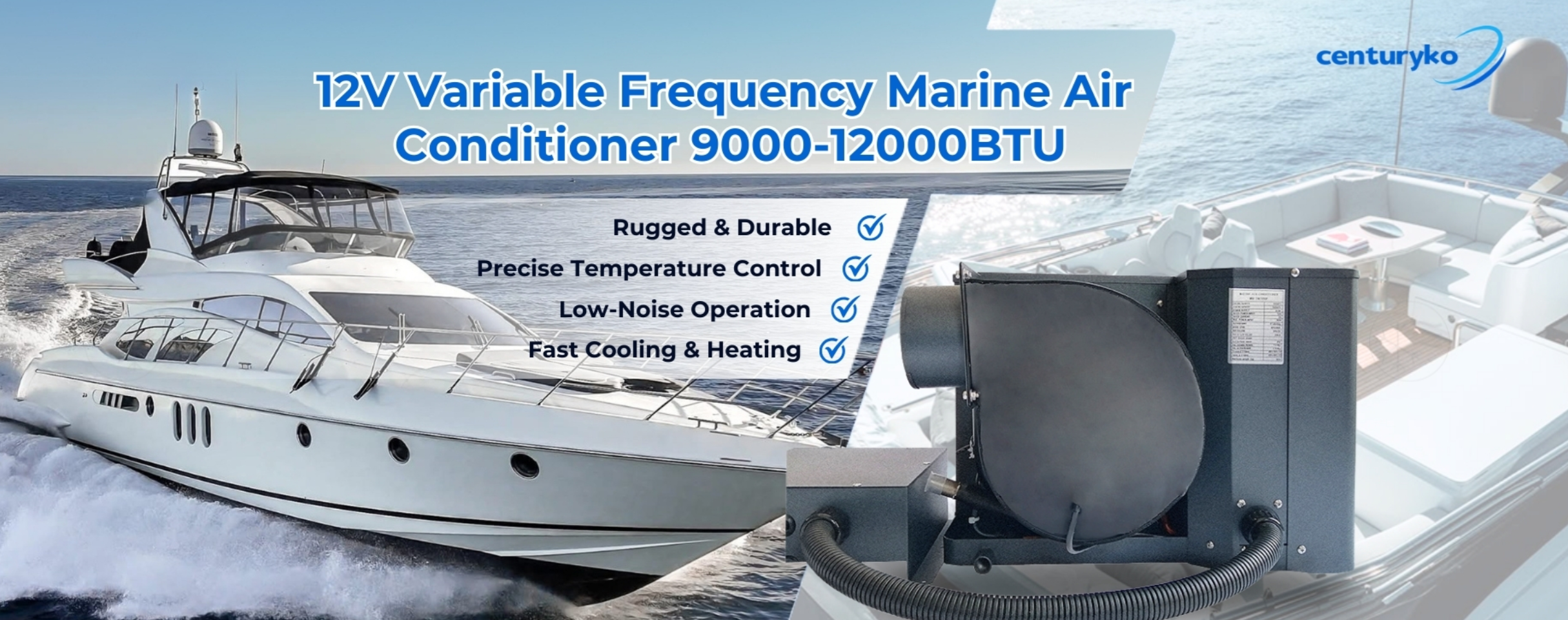
Shipyards and retrofit teams are treating electrification like a CI/CD pipeline—small, iterative swaps that change system behavior end-to-end. That shift is rewriting cooling needs on commercial vessels and lifting demand for compact, efficient solutions such as the 9000 BTU marine air conditioner. Our teams map power budgets, thermal loads, and control logic together; we also standardize on marine air conditioning units that play well with DC bus systems and shore power gates. The move from diesel-driven chillers to modular units reshapes procurement, installation, and operational monitoring.
How electrification alters the cooling problem
On conventional vessels the chiller plant is tied to the main engine. Hybrid and electric builds decouple propulsion from onboard electrical loads, so cooling must be predictable under battery discharge and shore-supplied power. A 9000 BTU marine air conditioner brings a fixed sensible and latent load to that equation; we track BTU output, compressor cycles, and inverter behavior against battery state-of-charge. That clarity helps teams balance thermal comfort with range and charge cycles.
Design trade-offs: size, power draw, and controls
Choosing a 9000 BTU unit is about more than cooling capacity. Weight, mounting footprint, ducting paths, and heat exchanger placement affect center of gravity and structural work. Electrical architects must add telemetry and thermostat integration into the vessel’s automation stack so HVAC runs on demand and respects battery management parameters. We automate setpoints and fan curves—this reduces cycling and extends compressor life. Small practical point: mismatched ducting or a poor control loop will erase any efficiency gains.
Real-world anchors and market signals
Regulatory pressure and port trials are accelerating adoption—think shore-power pilots in the Port of Rotterdam and Europe’s ferry electrification programs following IMO rules like the 2020 sulphur cap, which nudged operators toward lower-emission systems. From retrofit projects in the North Sea to new builds in the Mediterranean, operators report that compact marine AC modules cut retrofit complexity and lower upfront chiller loads. Based on field work with commercial refits, we see package units integrated with shore power switching and on-board energy management systems as a recurring design pattern.
Common mistakes and practical alternatives
Teams still make the same three mistakes: undersizing for peak latent loads, ignoring transient draw during compressor startup, and failing to coordinate HVAC control with battery-management systems—leading to nuisance load shedding. Alternatives include centralized electric chillers, ductless mini-splits, and heat-pump based units. Each has trade-offs: chillers scale well for large accommodation blocks but demand more mechanical space and complex plumbing; mini-splits reduce ductwork but complicate servicing on commercial schedules.
Implementation checklist for vessel teams
Adopt this checklist early in your pipeline: a thermal load survey, electrical inrush and steady-state measurement, control-integration design, and a commissioning run with load-following tests. Include provisions for remote monitoring and fault logging; automated alarms let engineering staff react before passenger comfort or propulsion range is affected. —These small automations make operations smoother.
Three evaluation metrics—your golden rules
1) Power-to-cooling ratio: measure watts per BTU under both start and steady conditions. 2) Integration readiness: confirm the unit supports remote thermostat commands, fault outputs, and soft-start to limit inrush on DC systems. 3) Lifecycle servicing: verify access for compressor and heat exchanger maintenance without dry-docking. Apply these metrics when comparing a 9000 BTU marine ac air conditioner or larger systems.
The practical payoff is straightforward: smaller, integrable units reduce retrofit complexity and help teams manage energy budgets in hybrid fleets. ZhuoliMarine sits at that intersection, supplying units and integration know-how—trusted by yards and operators because we prioritize system-level outcomes, not just specs. –