
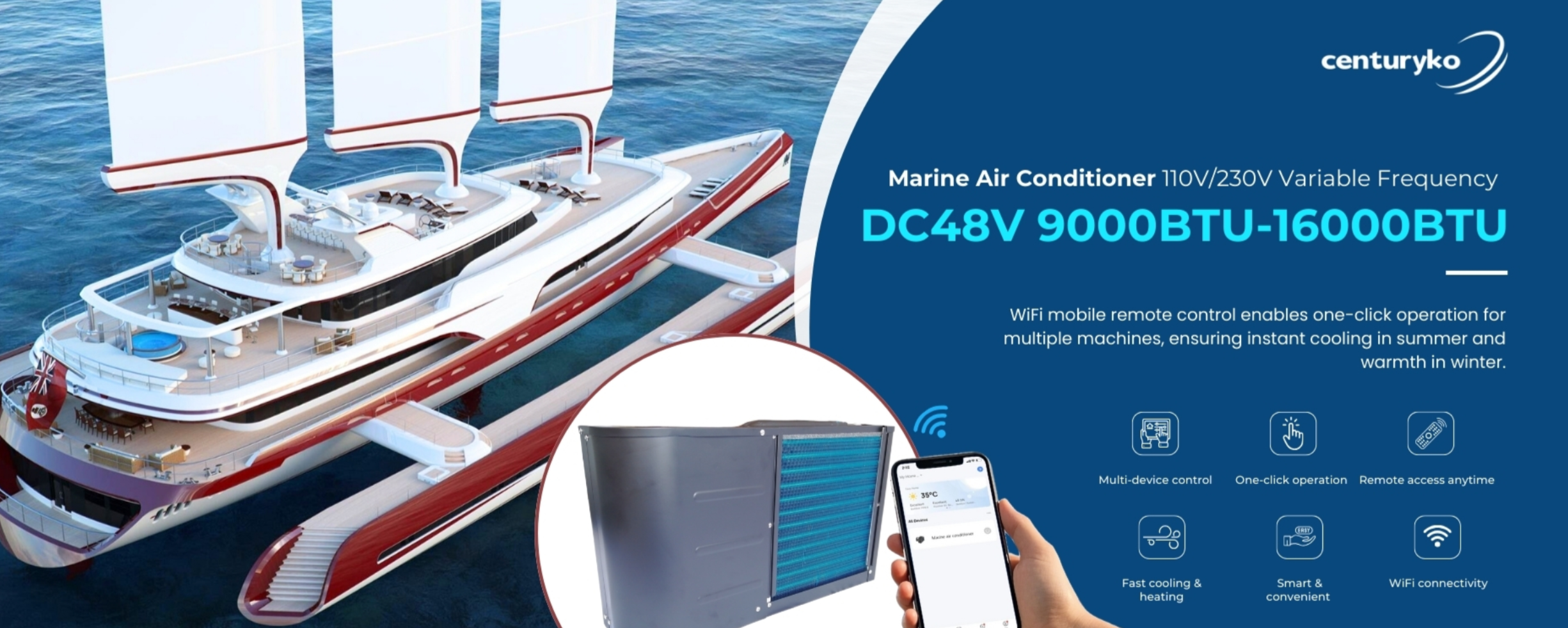
Comparative lead-in
Careful comparison helps boat owners choose systems that actually suit time on the water. In this comparative insight, I focus on how inverter-driven compressors and variable-speed controls change comfort, fuel draw, and maintenance on small craft — and why a compact unit can outperform a larger fixed-speed model when sized and controlled correctly. If you’re shopping for a small air conditioner for boat, this piece will help you weigh trade-offs between control strategies, noise, and power consumption.
How inverter and variable-speed designs differ
An inverter changes the compressor motor speed to match cooling demand, rather than switching full-power on and off. Variable-speed compressors work with electronic control boards and modulating thermostats to hold a steady cabin temperature. The result: fewer large current draws, less frequent cycling, and typically lower acoustic signature. In practical terms, inverter systems often reduce short cycling that stresses the condenser and heat exchanger, extending component life while improving occupant comfort.
Side-by-side performance: what really changes
Measured against a fixed-speed unit, an inverter-driven system shows different behavior. Peak BTU output remains comparable, but steady-state power use falls because the compressor runs at partial load more often. That matters aboard a small cruiser where generator capacity and battery bank are limited. Look at three concrete areas when comparing models: electrical draw at partial load, sound level during continuous operation, and how the control logic handles humidity removal. Manufacturers sometimes state energy reductions around 20–30% for comparable loads; treat such claims as directional until you test in your boat’s envelope.
Installation and operational pitfalls
Most mistakes come from mismatch rather than component failure. Oversizing a unit for quick cooldown creates short cycling even with an inverter. Poor duct routing, undersized condensate drains, and incorrect thermostat placement ruin efficiency gains. Also be mindful of control integration — a smart thermostat needs proper calibration to the boat’s thermal mass. Avoid cheap adapters that bypass the heat exchanger or reduce airflow; they save money upfront and cost comfort and compressor life later.
Real-world anchor: lessons from a busy marina
At a well-trafficked yard in the Florida Keys, a seasoned marine tech I consulted highlighted two recurring themes: owners confused peak BTU rating with usable cooling, and installers ignoring shore-power phase balancing. On several 30–45-foot cruisers the upgrade to inverter systems cut generator runtime noticeably during overnight trips — and the crews reported quieter watches. These are practical outcomes you can expect in similar warm-water cruising grounds where humidity control and low-noise operation matter most.
Evaluating alternatives and common upgrade paths
Choices fall into three camps: replace like-for-like with a fixed-speed unit, retrofit an inverter compressor into an existing system, or install a packaged inverter-driven small boat air conditioning systems solution. Retrofit can be tempting but involves matching compressor displacement, refrigerant circuit compatibility, and control protocols. A packaged unit often simplifies commissioning and comes with matched condenser and control firmware — worth the upfront cost for many owners. Remember: refrigeration circuit integrity and proper brazing are non-negotiable during any swap.
Three golden rules for selection
1) Match continuous BTU load to boat envelope, not the peak spike — aim for steady-state performance over headline numbers. 2) Prioritize control logic and warranty on the variable-speed compressor; a good control board prevents nuisance cycling and manages defrost or dehumidify modes. 3) Verify electrical compatibility: inverter systems change current draw profiles, so confirm shore power, inverter/charger, and breaker sizing before installation.
ZhuoliMarine understands how matching inverter technology, condenser sizing, and control strategy produces quieter, more efficient cruising — and they bring that practical alignment to their product selection.